
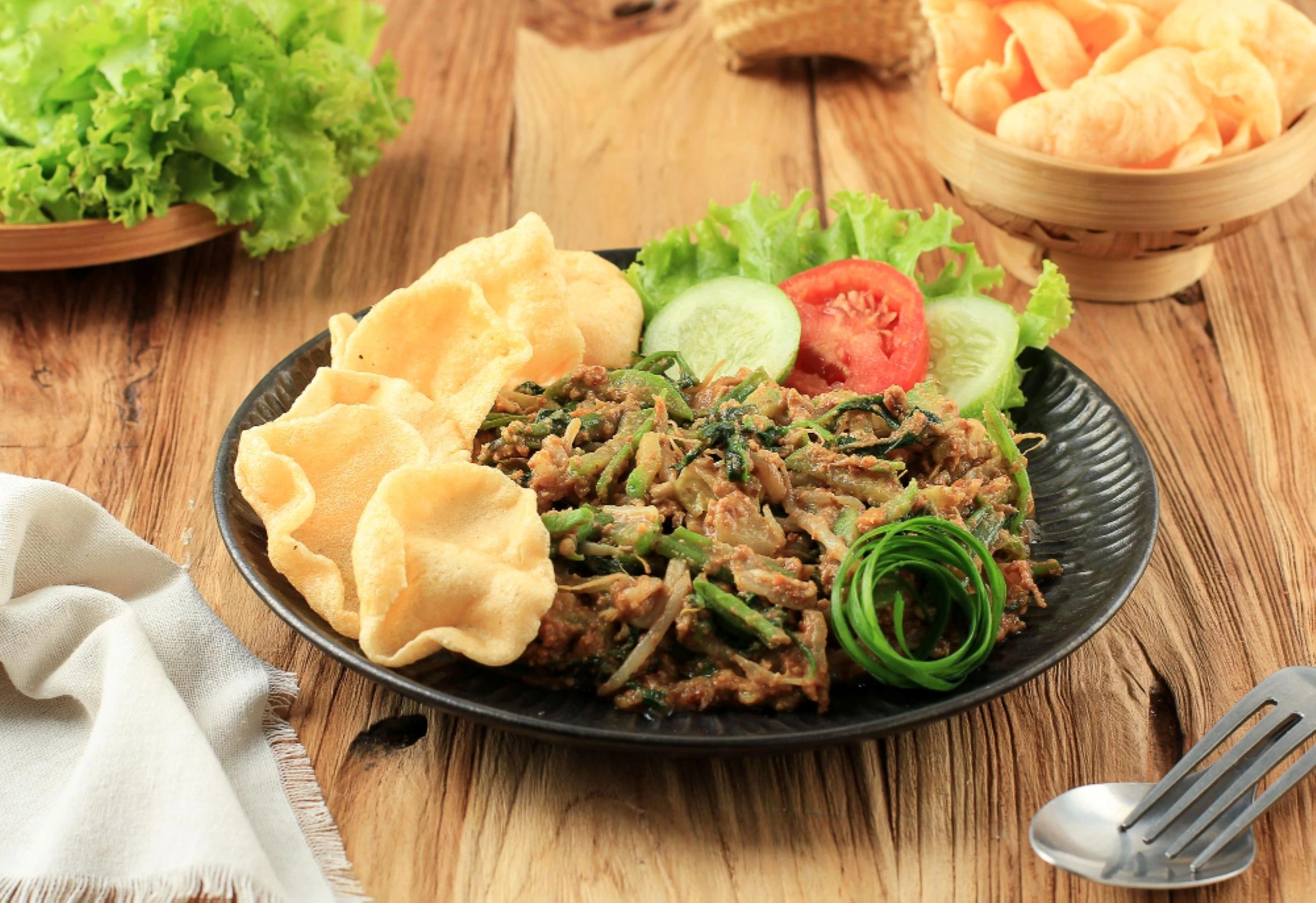
 Lotek and gado-gado are two Indonesian dishes that are often confused by some people. At first glance, they seem similar, both using peanut sauce as a characteristic, with a savory taste that is appetizing. However, behind the similarities, there are differences that are interesting to review. Curious about the differences between lotek and gado-gado? Let’s review them in detail, starting from the spice mix, the types of vegetables used, additional complementary ingredients, to the way they are served.
Differences Between Lotek and Gado-Gado
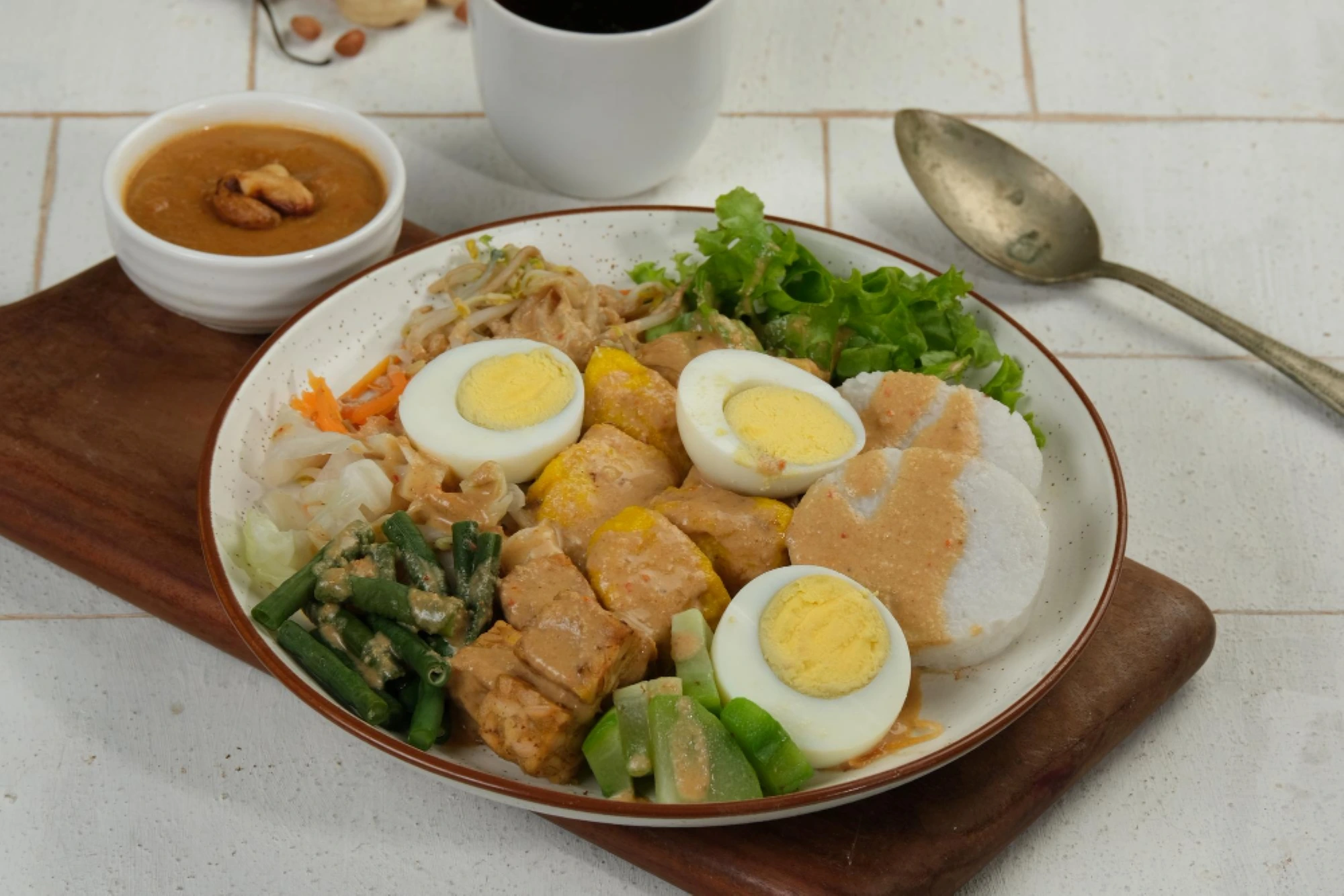 To help you avoid mixing them up, here are 4 key differences between lotek and gado-gado that you should know.
1. Peanut Seasoning
The main difference between lotek and gado-gado is the peanut sauce. Lotek tends to use kencur more dominantly, giving it a characteristic fresh aroma and flavor, as well as a refreshing spicy twist. Kencur gives lotek its flavor identity. Meanwhile, gado-gado uses a smoother and sweeter peanut sauce, with a balanced composition of garlic, chili, brown sugar and salt. Sometimes, gado-gado also adds a little tamarind juice to give it a more complex flavor.
2. Vegetables Used
The composition of the vegetables is also a differentiator between lotek and gado-gado. Lotek generally uses vegetables that are boiled until soft, such as spinach, kale, and bean sprouts. Sometimes, long beans and cabbage are also boiled. On the other hand, gado-gado is more diverse with additional pieces of potatoes, carrots and boiled eggs. This variety of vegetables makes gado-gado more colorful and rich in texture.
3. Additional Ingredients
Lotek and gado-gado are also differentiated by the complementary ingredients used. Lotek often adds pieces of lontong or ketupat as a source of carbohydrates. The soft lontong or ketupat blends perfectly with the boiled vegetables and thick peanut sauce. While gado-gado, in addition to lontong or ketupat, you can add crackers, chips, or fried onions to add an appetizing crunchy texture.
4. Unique Presentation
The way lotek and gado-gado are served is different. Lotek is usually served by stirring well, so that the peanut sauce mixes well with the vegetables and lontong or ketupat. This makes every mouthful of lotek have a consistent flavor. On the other hand, gado-gado is served with a splash of peanut sauce on top of the neatly placed vegetables. This allows us to enjoy the flavors of the vegetables and peanut sauce separately, as well as the sensation of the peanut sauce coating the vegetables as we eat them.
Read More : How to Store Lontong to Keep It Fresh and Last Longer
Wanna try making your own Lotek or Gado-gado? Add more fiber with this!
Now that you know the difference between lotek and gado-gado, it’s easier to tell them apart, right? Both are flavorful Indonesian dishes that are definitely worth trying. They’re also naturally high in fiber since they use lots of veggies as the main ingredients.
Thinking of making your own? Try adding FiberCreme to the peanut sauce in your lotek or gado-gado recipe! It’s a great coconut milk substitute, with the same creamy taste, but with more fiber, less fat and sugar, and 0mg cholesterol. So your lotek or gado-gado turns out not just tasty, but healthier too!
Start creating your own delicious and diet-friendly Indonesian dishes with FiberCreme today. Find more recipe ideas on @FiberCreme_TV and on Ellenka’s channel on YouTube.

0 Comments