
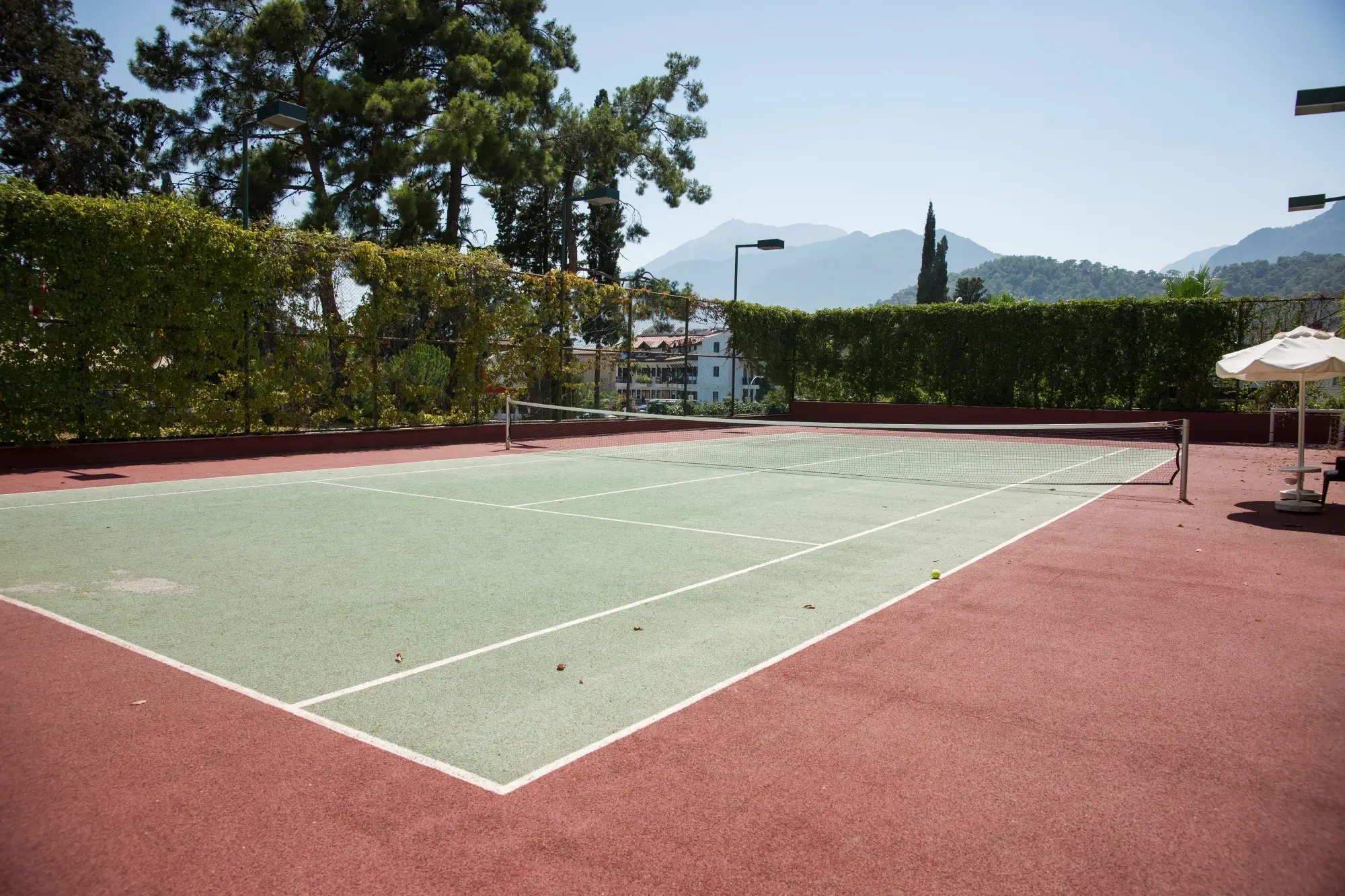
Have you ever felt like your game was going really well on one court, but the moment you switched courts, the ball suddenly felt different? Maybe it bounced higher, moved faster, or made you work a littleharder just to get to it. Turns out, it’s not just your imagination.
The court surface can affect how the ball bounces and moves. That’s why players who spend a lot of time playing tennis usually start to develop their own preferences. Some enjoy faster courts because theylike playing aggressively, while others prefer longer rallies.
So, if you usually just show up, play, and go home without thinking much about the type of court you’re on, it might be worth getting to know the different types of tennis courts and their characteristics. Who knows? You might finally understand why your game feels different every time you switch courts. Let’s take a look!
What Makes Different Types of Tennis Courts Different?
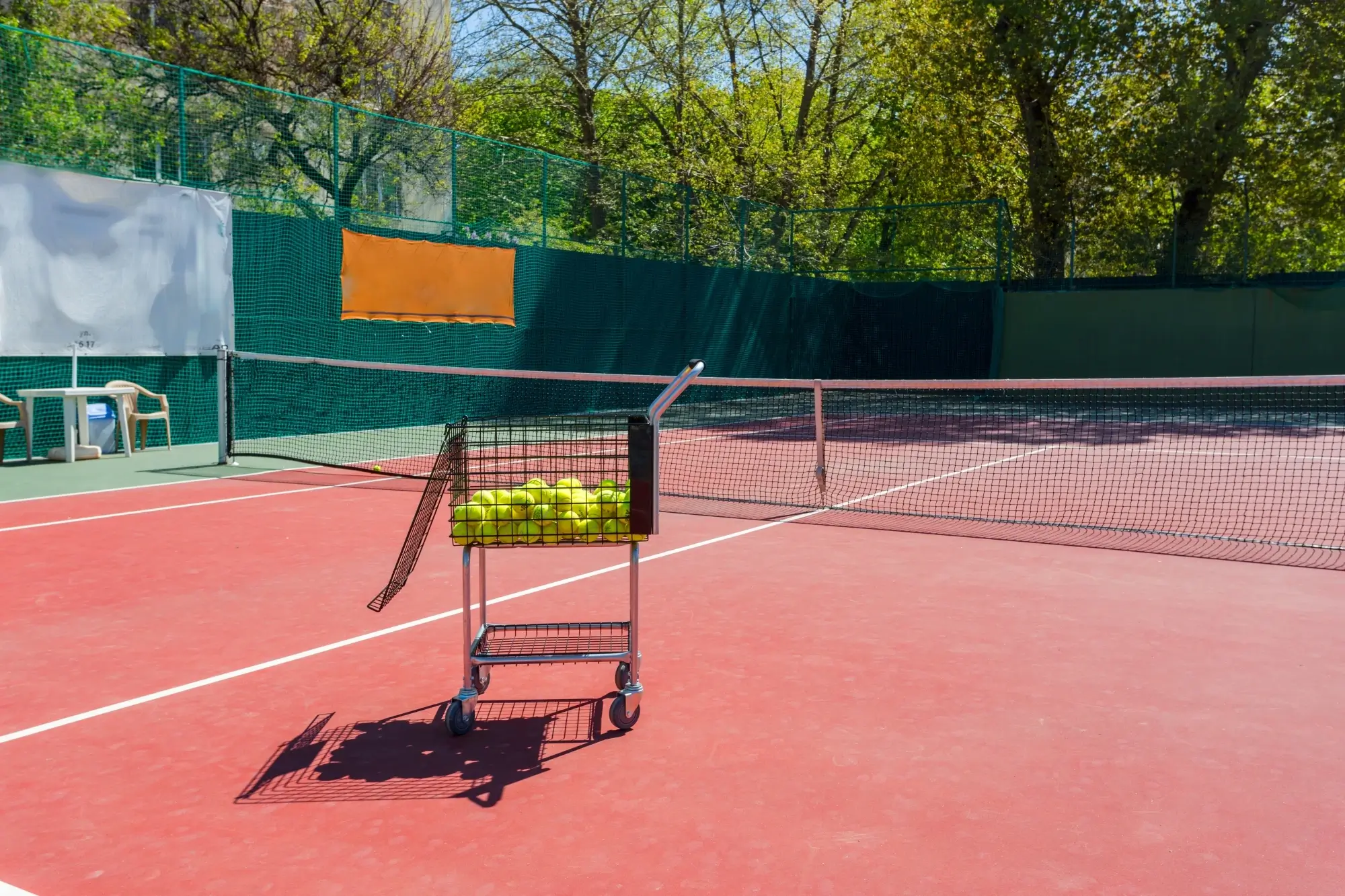
In general, what sets tennis courts apart is the surface the match is played on. Different surfaces can affect the bounce and speed of the ball. As a result, they can also influence the way players approach the game.
On some courts, the ball can move faster, making points shorter. On others, the ball slows down, giving players more time to chase it down and return it. That’s why playing on different courts can also be a useful way to improve your game. You get to learn how to adjust your footwork, timing, and strategy depending on the surface.
Types of Tennis Courts
In general, there are several common types of tennis courts, including hard courts, clay courts, grass courts, and synthetic courts. Each one has its own characteristics when it comes to ball speed andbounce. Let’s get to know them one by one!
1. Hard Court
Hard courts are probably one of the most familiar surfaces for tennis players. As the name suggests, this type of court uses a hard surface, usually made from materials such as concrete or asphalt, then coated with a special layer to create a certain playing feel.
The ball bounce on a hard court is usually quite consistent. Because of that, this type of surface works well for different playing styles. Players who enjoy staying at the baseline can still enjoy long rallies, while more aggressive players also have plenty of opportunities to attack.
For beginners, the relatively predictable bounce can also be helpful while learning proper timing. That said, don’t assume every hard court feels exactly the same. The speed of the surface can still vary depending on the materials and finishing used.
2. Clay Court
If you’ve ever seen a tennis match played on a brick-red surface, chances are you were looking at a clay court. This type of surface is known for producing a slower style of play compared with some other courts. When the ball hits clay, it usually loses some of its speed and can bounce quite high. As a result, rallies tend to last longer.
For players who enjoy building points patiently from the baseline, clay courts can be a lot of fun. But they come with their own challenge too. Because more balls tend to come back, you need patience and enough stamina to survive longer rallies. Footwork also feels different because players can slide when chasing the ball. If you’re used to trying to finish a point in two or three shots, playing on clay might really test your patience.
3. Grass Court
Grass courts have a very different character. They use natural grass and are known for producing relatively fast play with a lower ball bounce. Because the ball tends to travel quickly, players usually have less time to prepare for the next shot.
That makes quick reactions especially important. Players with strong serves or those who feel comfortable attacking near the net can also benefit from this type of surface. However, natural grass courts require quite a lot of maintenance, which is why they’re not always easy to find for everyday play.
So, if you normally play on hard courts and one day get the chance to try a grass court, don’t be surprised if your timing suddenly needs a little adjustment.
4. Synthetic or Carpet Court
Besides hard, clay, and grass, there are also courts with synthetic surfaces that are often referred to as carpet courts in everyday use. These courts use synthetic materials installed over a base surface. The playing characteristics can vary depending on the material. Some synthetic courts feel fairly fast, while others are designed to provide a more comfortable bounce.
Synthetic courts can also be found in both indoor and outdoor facilities, depending on the material and the needs of the venue. Since every surface can feel different, it’s always a good idea to hit a few rallies first and see how the ball reacts before getting into a more serious game. Think of it as a mini warm-up while you get a feel for the court.
Are Indoor and Outdoor Courts Different Types of Tennis Courts?
This is another thing that often causes confusion. The terms indoor and outdoor actually refer more to where the court is located, rather than the type of playing surface. Indoor courts are located inside a building or covered area, while outdoor courts are exposed to the open air.
The court surface itself can still vary. Playing indoors has the advantage of being more protected from rain, direct sunlight, and wind. Outdoor tennis, on the other hand, can bring extra challenges because you need to adapt to the weather. Ever gone for a serve only to have the wind suddenly move your ball toss? Outdoor players will definitely relate.
Played on Different Courts Before? Maybe It’s Time to Try a Tournament
Once you understand the different types of tennis courts and become more comfortable adjusting your game, you might start wondering what it feels like to bring all that practice into a real match setting. If you’re already comfortable playing doubles, FiberCreme Tennis Cup 2026 is one event worth keeping on your radar.
FiberCreme Tennis Cup 2026 will be held on September 19–20, 2026, at Ancol Tennis Warehouse (ATW), Jakarta. The tournament features a Women’s Doubles Team category for Upper Beginner, Low Intermediate, and Intermediate players, as well as a Women’s Doubles Individual category for Low Beginner players.
So, if you’ve been spending more time on the court and want to see how your game holds up against new opponents, you can choose the category that best matches your level.
Read more: Looking for a Tennis Tournament in Jakarta in September 2026? Get to Know FiberCreme Tennis Cup 2026
Ready to Take Your Game to FiberCreme Tennis Cup 2026?
Now you know that the different types of tennis courts can each create a different playing experience. Hard courts tend to offer a more consistent bounce, clay courts often lead to longer rallies, grass courts are known for faster play, while synthetic surfaces can vary depending on the material used.
Whatever your favorite court may be, the key is still the same: the more often you play, the better you’ll become at reading the bounce and adjusting your game. If your training has been consistent, you’ve found a doubles partner you really click with, and you’re ready to experience a real tournament atmosphere, sign up for FiberCreme Tennis Cup 2026! For more information and registration, contact:
Dorthy: 0877-8433-9701
Albert: 0816-1110-656
Don’t forget to follow @fibercreme, @ancoltenniswrhouse, and @infinitetournament on Instagram for the latest event updates. Now all that’s left is to get your racket ready, bring your best partner, and keep practicing before match day.
Let’s PLAY, FUEL, and FEEL GOOD at FiberCreme Tennis Cup 2026!


0 Comments