
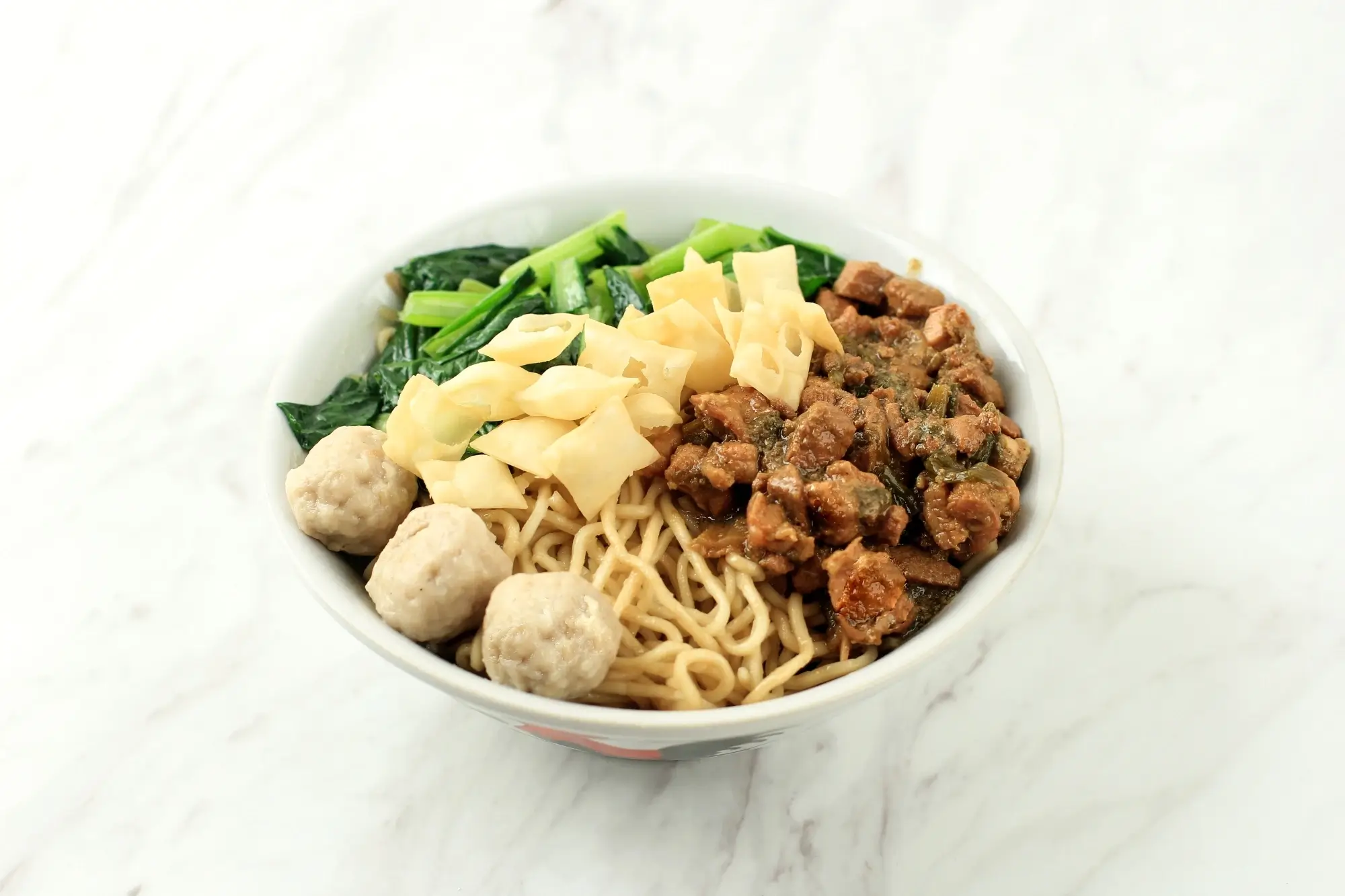
 Both come with noodles, chicken, vegetables, and sometimes even wontons. At first glance, you might wonder: what exactly is the difference between mie ayam and mie yamin?
Especially when both appear on the same menu. Ordering the wrong one might not be a big deal, but the flavor could be quite different from what you expected. You are craving something savory, and a sweeter bowl arrives—or the other way around.
Rather than guessing from the names, let’s look at the easiest ways to tell them apart.
1. Flavor Is the Clearest Difference
If you are unsure which is which, start with the flavor.
Mie ayam typically has a savory, slightly salty profile from the chicken oil, seasoning, and chicken topping. Some versions include a touch of sweetness from chicken cooked in sweet soy sauce, but the overall flavor usually remains predominantly savory.
Mie yamin, meanwhile, is more commonly associated with a sweet-and-savory combination. The sweet soy sauce coating the noodles adds both flavor and a deeper color.
There is one important detail, though: not all mie yamin is sweet. Some places also serve yamin asin, a savory version. So sweetness is a common characteristic, not a universal rule.
2. Take a Look at the Noodles’ Color
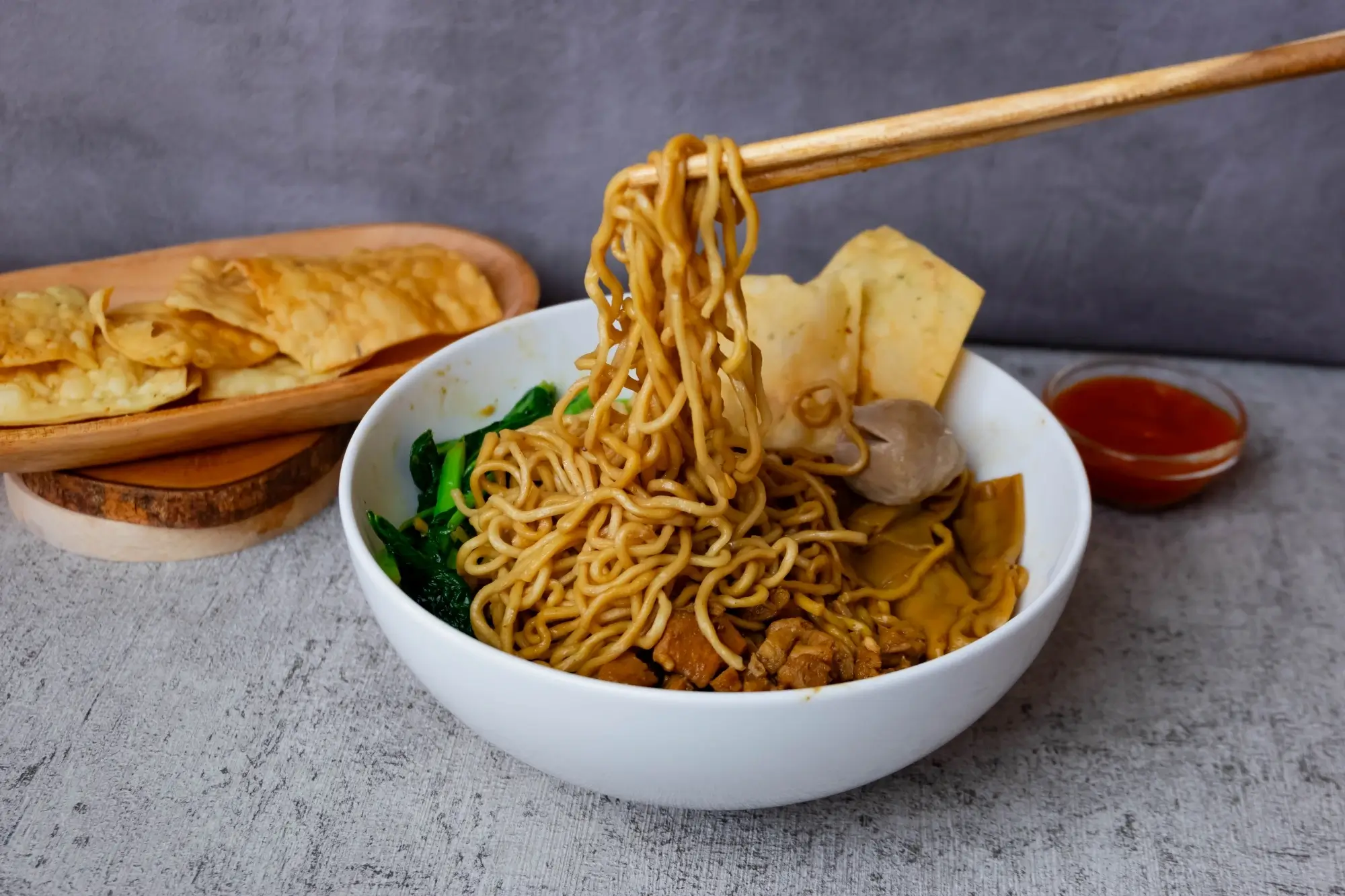 You can often spot the difference between mie ayam and mie yamin before taking your first bite.
Mie ayam noodles usually look pale or yellowish because they are tossed with oil and savory seasonings.
Sweet mie yamin, on the other hand, generally looks browner because the noodles have already been mixed with sweet soy sauce. The seasoning also tends to visibly coat the noodles.
This clue will not apply to every vendor, especially those serving savory yamin. But for the sweet version commonly found on menus, color can be a quick way to tell.
3. The Broth Can Offer Another Clue
What about the broth?
With mie ayam, broth is usually part of the meal. It may be added directly to the noodle bowl or served on the side, depending on the vendor’s style.
Mie yamin is more often associated with seasoned noodles served relatively dry, with a separate bowl of broth. You can sip the broth on its own or add it to the noodles a little at a time.
Since Indonesia has so many noodle variations, serving styles can differ between regions and vendors. That is why the flavor and base seasoning are usually more reliable clues.
4. If the Toppings Are Similar, Why Do They Taste Different?
This is where things can get confusing. Both mie ayam and mie yamin may come with chicken, mustard greens, spring onions, wontons, and even meatballs. But similar toppings do not necessarily mean similar flavors.
The biggest difference is how the noodles are seasoned before the toppings are added. Mie ayam generally emphasizes savory flavors, while sweet yamin gets its distinctive sweet-and-savory taste from the soy sauce coating the noodles.
So, the next time you see two bowls with almost identical toppings, do not assume they will taste the same!
From Mie Ayam to Instant Noodles, There’s Always Something to Explore
Once you understand the difference between mie ayam and mie yamin, one thing becomes clear: something as simple as noodles can taste completely different depending on the seasoning and how they are served.
The same goes for instant noodles at home.
Sometimes, you want that familiar instant noodle flavor with a little twist. You do not have to turn them into mie ayam or yamin. You can explore another way to enjoy them by making the broth creamier and more savory.
Sound tempting? Then the Creamie Hack is worth a try.
Creamie: A New Twist on Your Familiar Favorites
Creamie is the name for instant noodles made creamy with FiberCreme.
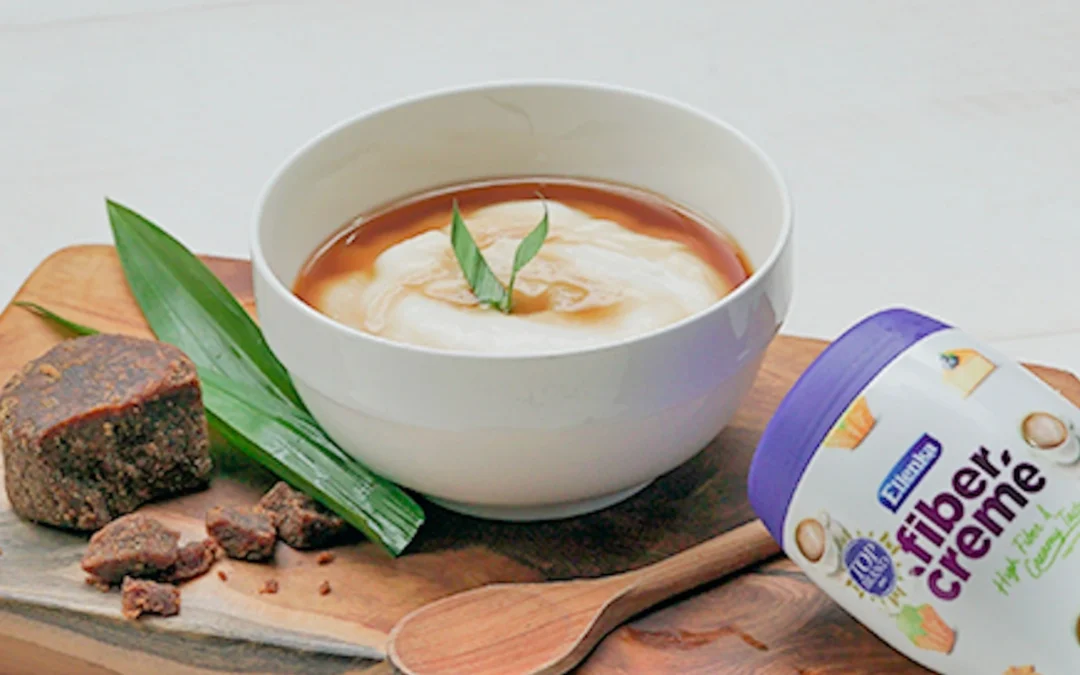
FiberCreme is a high-fiber creamer powder that you can add to hot noodle broth and stir until evenly combined. It brings creaminess and savory flavor to a familiar bowl, giving it a different feel without making preparation complicated.
That does not mean losing the noodles’ original flavor. You can keep the seasoning you love while giving the broth a smoother texture.
And there is more to it than creaminess—FiberCreme also adds dietary fiber to your bowl!
A daily fiber target of around 30 grams can take some planning. For perspective, that is roughly the amount found in seven medium apples eaten with their skins. The exact amount will vary with the apples’ size and variety, but it gives you an idea of why finding different ways to add fiber throughout the day can be useful.
Read more: What Is the Creamie Hack? An Easy Way to Make Noodles Creamier with FiberCreme
So, Which Noodles Are You Craving?
If you want a classic savory bowl with chicken toppings, mie ayam could be your pick. If you prefer noodles coated in a more pronounced sweet-and-savory seasoning, sweet yamin has its own appeal.
And if you are at home with a packet of instant noodles and feel like trying something different, why not give the Creamie Hack a go?
Already picturing which favorite noodles you would turn into Creamie? Make it your own, share your creation on social media, and tag @FiberCreme!
Need a little inspiration first? Visit @FiberCreme_TV on Instagram or Ellenka Official on YouTube for practical Creamie ideas to inspire your next bowl.


0 Comments