
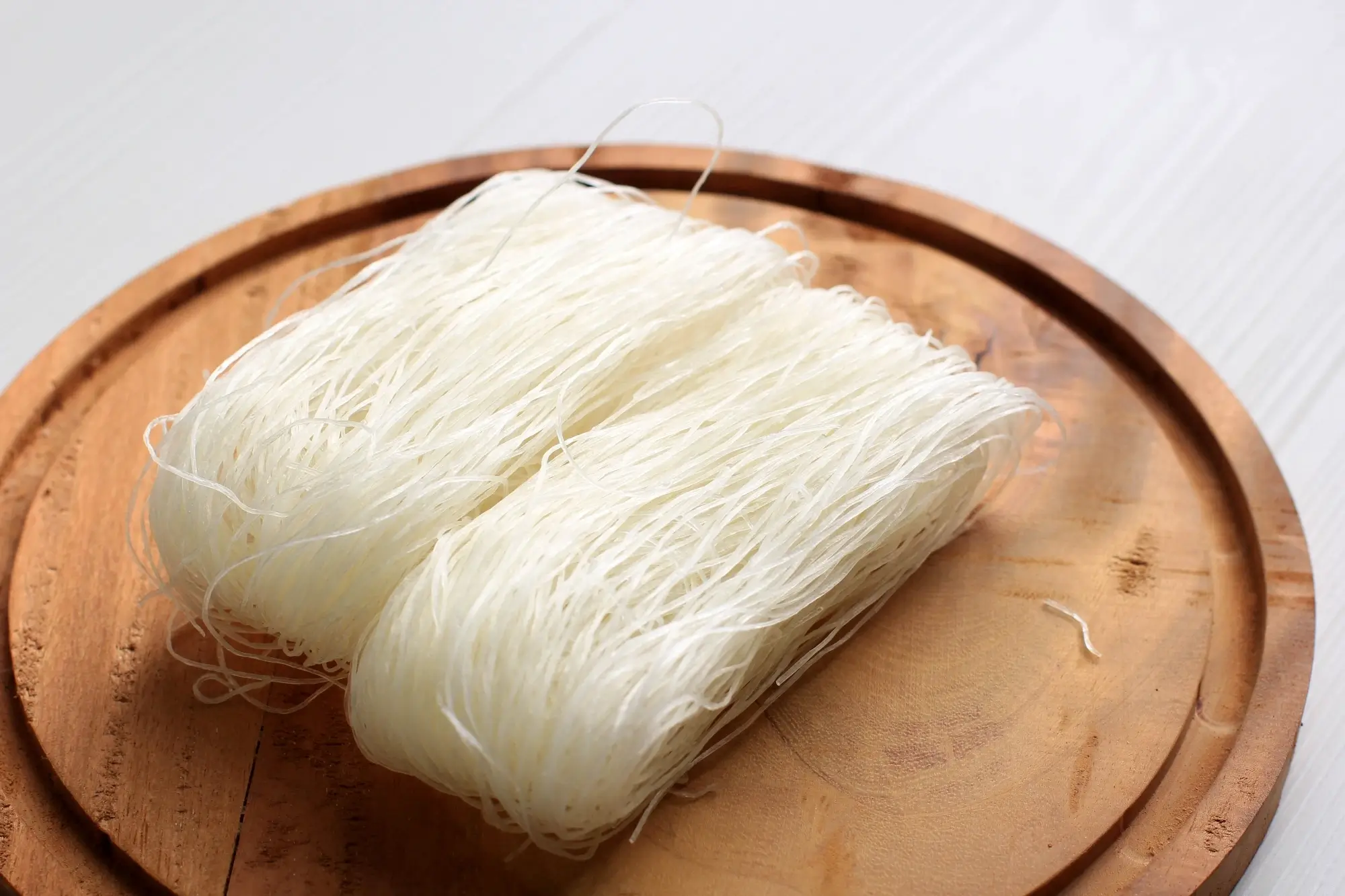
 If you enjoy cooking or often eat dishes like soup, soto, or meatball soup, you’re probably already familiar with glass noodles and rice vermicelli. At a glance, they do look quite similar, both are thin, pale in color, and commonly used as complements in various dishes. But don’t be mistaken, there are actually some important differences between the two!
So you don’t get confused when cooking or choosing ingredients, let’s break down the differences below!
1. Main Ingredients
The most fundamental difference between glass noodles and rice vermicelli lies in their ingredients. Glass noodles are generally made from mung bean starch, although some are also made from cassava or potato starch. That’s why they’re often referred to as glass noodles or transparent noodles.
Meanwhile, rice vermicelli is made from rice flour, which gives it a whiter appearance and keeps it opaque, unlike glass noodles.
2. Texture After Cooking
In terms of texture, glass noodles and rice vermicelli have distinct characteristics. Glass noodles tend to be chewier, smoother, and more elastic, so when cooked properly, they don’t break easily.
On the other hand, rice vermicelli has a softer and slightly more fragile texture. If overcooked, it can become too mushy and break apart easily.
3. Appearance and Color
Visually, the difference between the two is quite noticeable. Glass noodles turn clear or transparent after cooking, while rice vermicelli remains white even after being boiled. Because of their transparent look, glass noodles are often chosen for dishes that aim for a more appealing presentation.
4. Cooking Method
The way you prepare glass noodles and rice vermicelli is also slightly different. Glass noodles are usually soaked in hot water until soft, then ready to be used.
Meanwhile, rice vermicelli can be briefly boiled or soaked in hot water, but you need to watch the timing carefully to prevent it from becoming too soft.
5. Uses in Cooking
Both are widely used in various dishes, but they typically serve slightly different purposes. Glass noodles are commonly used in soups, soto, meatball dishes, and as fillings for spring rolls or pastries.
Rice vermicelli, on the other hand, is more commonly used for stir-fried vermicelli, as a complement to fried rice, or in stir-fry dishes. Although they can sometimes be substituted for each other, the final result will differ, especially in terms of texture and appearance.
6. Nutritional Content
Both glass noodles and rice vermicelli are sources of carbohydrates. However, since they are made from different ingredients, their nutritional content can vary slightly.
Glass noodles made from mung beans may contain a small amount of additional protein, while rice vermicelli is more commonly known as a source of energy. Still, both are best combined with other ingredients to create a more balanced meal.
Tips for Choosing Good Quality Glass Noodles and Rice Vermicelli
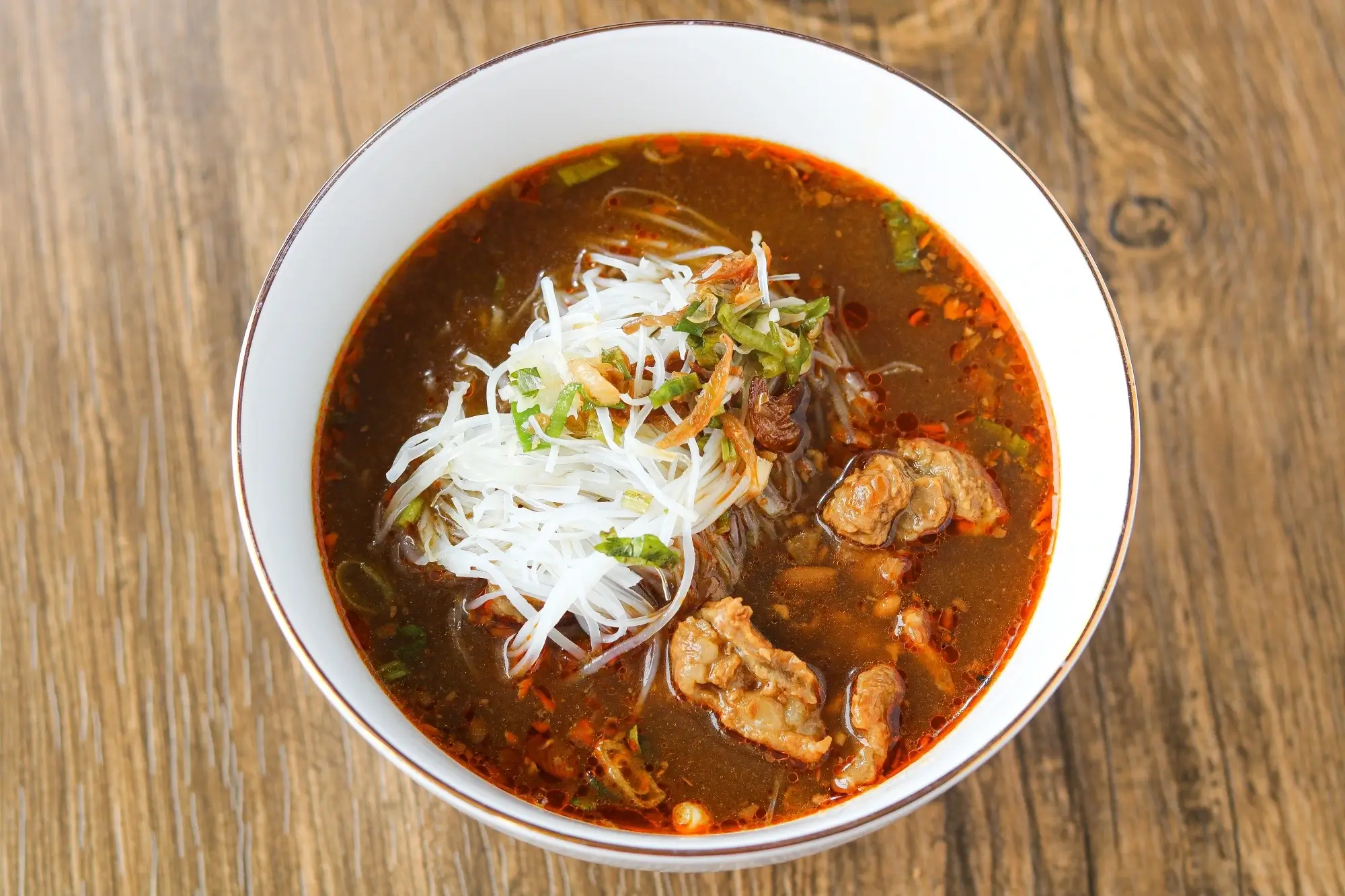 To get the best results in your cooking, keep these tips in mind:
- Choose products that are not easily broken or brittle
- Avoid those with a musty smell
- For glass noodles, pick ones that don’t look dull
- For rice vermicelli, choose ones with a natural white color, not overly bright
Baca juga: Types of Korean Noodles Commonly Found in Popular Dishes
Make Your Glass Noodles and Rice Vermicelli Dishes Creamier and Healthier with FiberCreme!
Now that you understand the differences between glass noodles and rice vermicelli, from ingredients and texture to cooking methods, you can more easily decide which one suits your dish best.
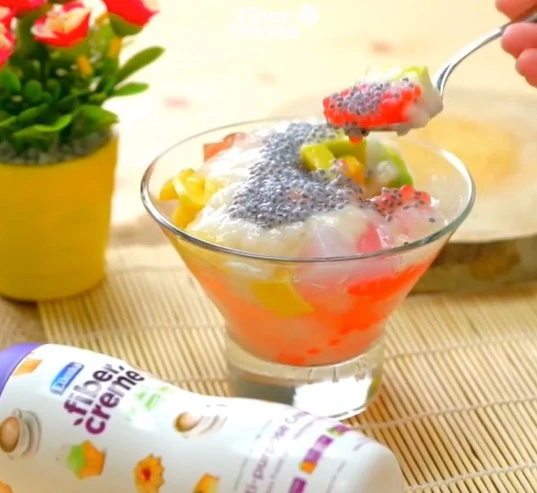
To make your dishes even more special, you can turn them into creamy meals like coconut-based glass noodle soup, vermicelli curry, or rich creamy soups. But if you’re aiming for a healthier option, try replacing coconut milk with FiberCreme!
FiberCreme is a versatile creamer that’s high in fiber, low in sugar, and contains 0 mg cholesterol. It works as a great alternative to coconut milk or dairy, giving you that same creamy and delicious taste, but in a lighter and healthier way.
Let’s explore more creative and healthier glass noodle and rice vermicelli dishes with FiberCreme! Find more recipe inspiration on Instagram @FiberCreme_TV and the Ellenka YouTube channel!
0 Comments